
Coral Gables, FL · Miami-Dade County
Owner's Affidavit of Exemption – Roof-to-Wall Connection
Affidavit allowing single-family homeowners to exempt their property from hurricane mitigation roof-to-wall retrofit requirements based on building value or construction compliance.
- Florida-licensed notary
- ~15 min average
- Notarized PDF emailed
What you’ll need
- Government-issued photo ID
- Webcam-enabled device (laptop or phone)
- This form, ready to upload as a PDF
What this form is
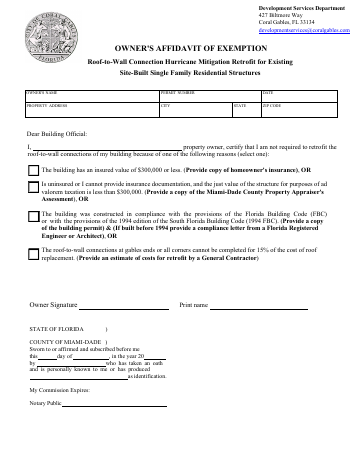
This affidavit lets residential property owners claim exemption from mandatory roof-to-wall connection retrofits required by local hurricane mitigation ordinances. Owners can qualify based on insured value under $300,000, just value under $300,000 if uninsured, compliance with current Florida Building Code standards, or if retrofit costs exceed 15% of roof replacement cost. Supporting documentation such as insurance policies, property appraisals, building permits, or contractor estimates must accompany the signed affidavit.
Who needs it
Single-family homeowners in Coral Gables who received a roof-to-wall connection retrofit notice but believe their property qualifies for an exemption.
Why it needs a notary
This affidavit must be notarized because it contains a sworn statement made under oath before a notary public to verify the owner's claimed exemption basis is truthful and legally binding for the permitting process.
How to get this notarized
- 1
Download/Complete Form
Obtain the official 'Owner's Affidavit of Exemption – Roof-to-Wall Connection' form from the Coral Gables city website or relevant department. Fill out all sections completely, but DO NOT sign it yet.
- 2
Gather Identification
Prepare a valid, government-issued photo identification (such as a driver's license, state ID, or passport) that you will present to the notary.
- 3
Schedule Notary Appointment
Book an appointment with City Notary. Choose a time and location convenient for you in Coral Gables.
- 4
Meet Notary
Meet with your City Notary as scheduled. Present your valid ID and the unsigned affidavit. You will sign the document in the notary's presence.
- 5
Receive Notarized Affidavit
The notary will then complete and affix their seal to the affidavit, officially notarizing your Owner's Affidavit of Exemption – Roof-to-Wall Connection.
- 6
Submit to City
Submit the notarized affidavit along with any required supporting documentation (e.g., insurance policies, appraisals) to the appropriate department within the City of Coral Gables.
Preview the form
The blank PDF straight from Coral Gables. Look it over, then upload your filled copy to start the notary session.

You’ll need ID and a webcam.
A licensed Florida online notary will join you on video, verify your government-issued ID, witness your signature, and apply their seal. You’ll receive the notarized PDF by email when the session ends.
Frequently asked questions
- How do I notarize my Roof-to-Wall Connection Exemption Affidavit in Coral Gables?
- Schedule an appointment with City Notary in Coral Gables. Bring your completed Owner's Affidavit of Exemption – Roof-to-Wall Connection form and a valid government-issued ID. Our notary will verify your identity and witness your signature.
- Do I need to notarize the Owner's Affidavit of Exemption for roof-to-wall connections?
- Yes, the Owner's Affidavit of Exemption – Roof-to-Wall Connection requires notarization because it is a sworn statement. A notary public must verify your identity and witness your signature to ensure the statement's legal validity.
- What is the Roof-to-Wall Connection Exemption Affidavit for Coral Gables residents?
- This affidavit allows single-family homeowners in Coral Gables to claim an exemption from mandatory hurricane mitigation roof-to-wall retrofit requirements. Exemptions can be based on property value, current building code compliance, or excessive retrofit costs.
- What documents do I need to bring for notarizing my Roof-to-Wall Exemption form?
- You only need to bring the unsigned Owner's Affidavit of Exemption – Roof-to-Wall Connection and a current, valid government-issued photo identification (e.g., driver's license, passport). Supporting documents for your exemption are for the city, not the notary.